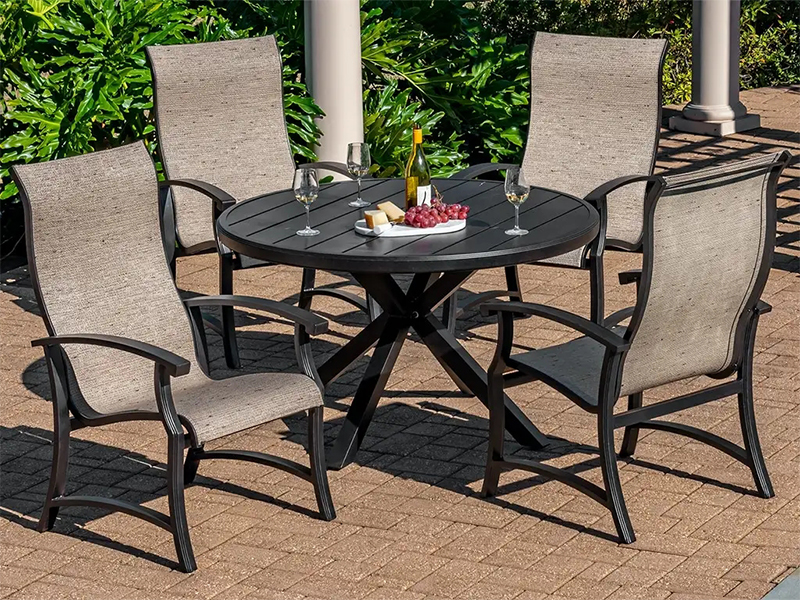
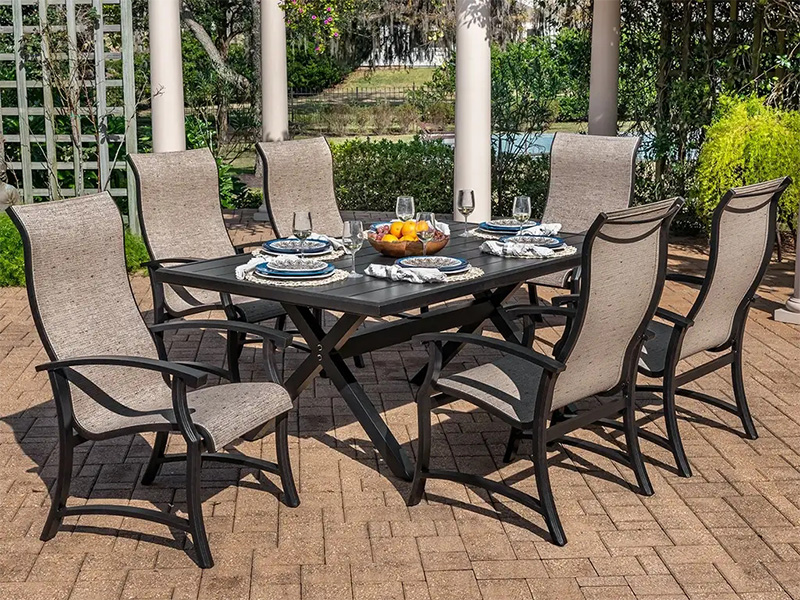
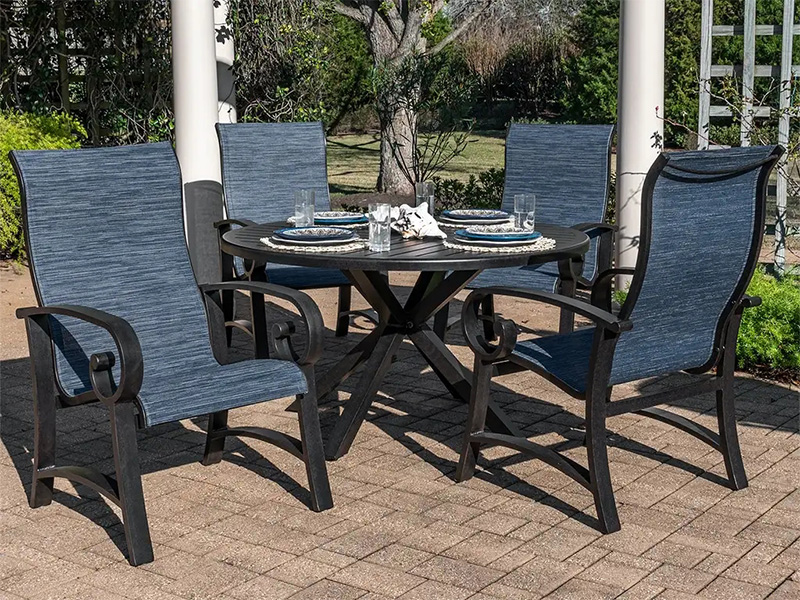
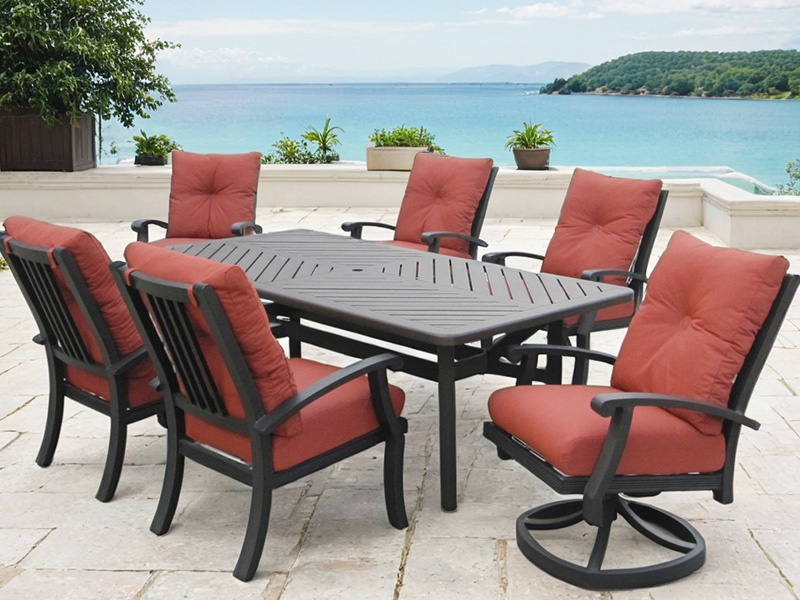
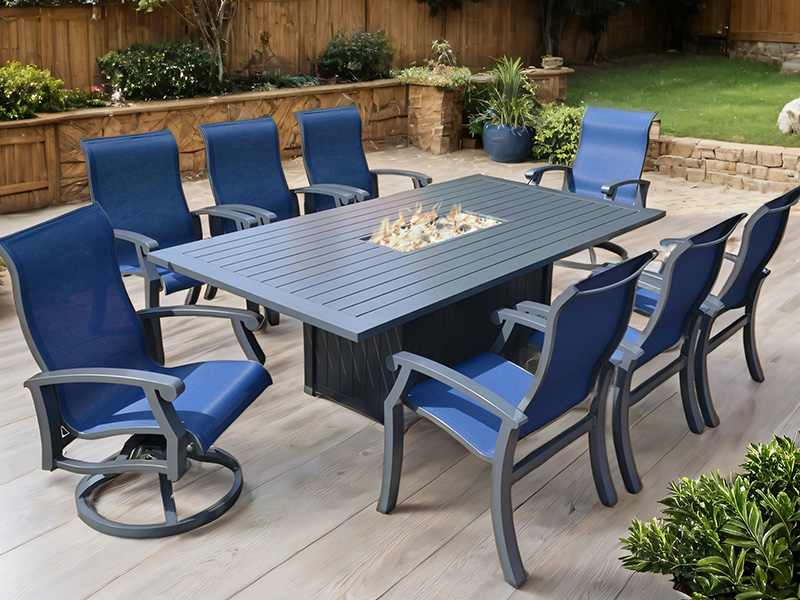
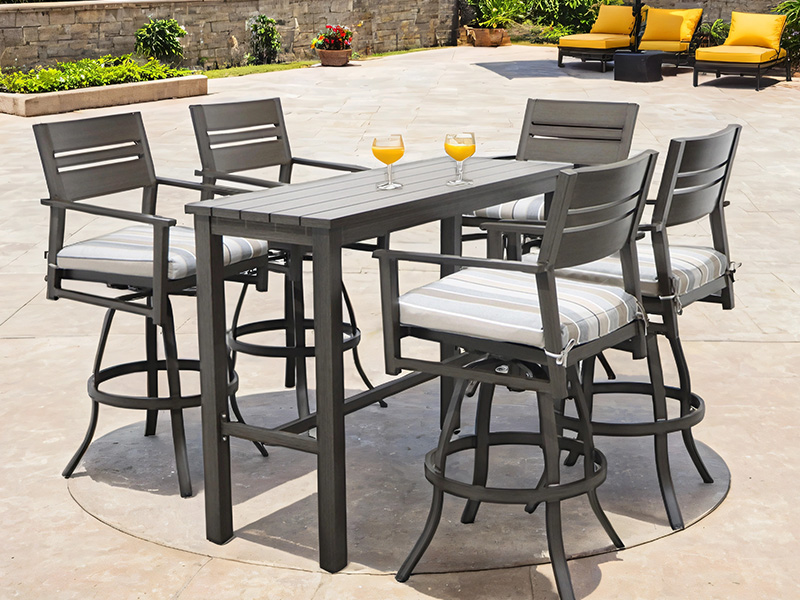
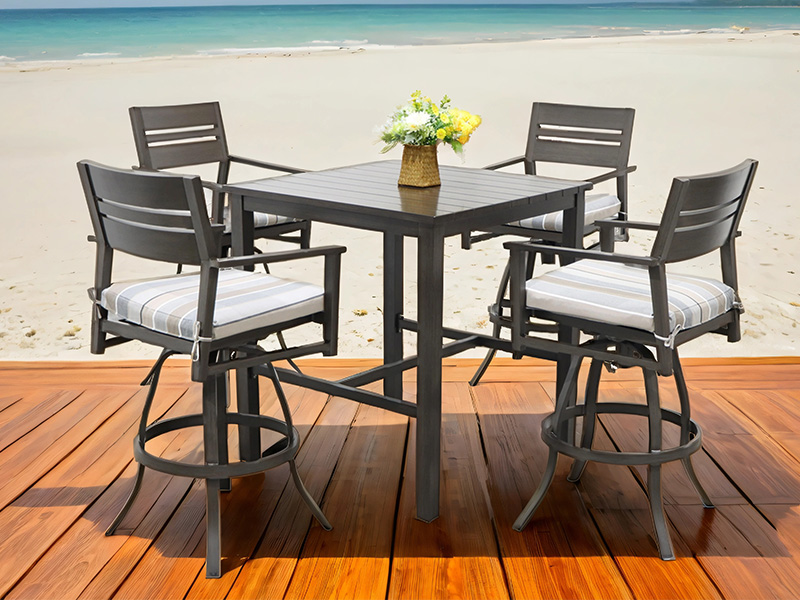
In modern public spaces, parks, and commercial environments, aluminum benches are increasingly becoming the preferred choice for public seating due to their lightweight, durability, and aesthetic appeal. Compared to traditional wooden or steel benches, aluminum alloy benches not only excel in structural performance but also offer significant advantages in lifespan and maintenance costs.
Core Advantages of Aluminum Alloy Material
Aluminum alloy, as the main structural element of benches, boasts significant advantages such as light weight, high strength, and excellent corrosion resistance. Compared to steel, aluminum alloy has a lower density, making benches easier to handle and install, while also reducing overall transportation costs. The strength properties of aluminum alloy allow it to withstand long-term use pressure and environmental loads, maintaining structural stability even with frequent use in public places.
Corrosion resistance is another major advantage of aluminum alloy benches. Through surface treatment technologies such as anodizing or powder coating, aluminum alloy maintains excellent protective performance in humid, rainy, or salt spray environments. This is especially important for outdoor benches, effectively preventing rust, deformation, and aging, thus extending their lifespan and maintaining a good visual appearance.
Structural Design and Engineering Considerations
The structural design of aluminum alloy benches not only relates to user comfort but also directly affects their load-bearing capacity and durability. During the design process, ergonomic principles are typically incorporated to rationally determine the seat height, seat depth, and backrest angle to provide the optimal seating experience. Simultaneously, the structural design must also consider overall stability, ensuring the bench remains sturdy under multiple loads through a reasonable support layout and connection methods.
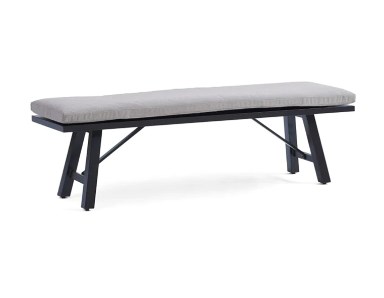
Modern aluminum alloy benches often employ modular designs, facilitating production, transportation, and installation. Modular structures allow components such as seats, backrests, and armrests to be manufactured and transported separately, requiring only simple assembly during on-site installation. This design not only improves production efficiency but also facilitates subsequent maintenance and replacement.
The Importance of Surface Treatment Technology
Surface treatment technology plays a crucial role in the weather resistance and aesthetics of aluminum alloy benches. Common surface treatment methods include anodizing, powder coating, and electrostatic spraying. Anodizing forms a dense oxide film on the surface of aluminum alloys, increasing corrosion resistance and giving the metal a natural luster. Powder coating, by covering the surface with a uniform coating, not only enhances protective performance but also allows for a variety of colors and textures, ensuring the benches harmonize with the surrounding environment.
Modern processing techniques also allow for anti-slip and wear-resistant treatments on the bench surface, ensuring that scratches and wear are less likely to occur over long-term use. This is particularly important for benches in public places, improving both comfort and overall lifespan.
Applications of Aluminum Benches: Due to their structural stability, corrosion resistance, aesthetic appeal, and ease of maintenance, aluminum alloy benches are widely used in urban parks, scenic areas, campuses, commercial pedestrian streets, and public transportation stations. In urban green spaces, aluminum alloy benches not only provide rest areas but also complement the surrounding landscape with their modern design.
In commercial environments, aluminum alloy benches often serve as core facilities in rest and social spaces, meeting high-frequency usage needs. Their lightweight nature allows for flexible placement, enabling diverse arrangement to suit different scenarios and spatial requirements. Meanwhile, superior surface treatment ensures that the benches maintain their good appearance under conditions such as sunlight and rain, adding aesthetics and comfort to the overall commercial environment.
Aluminum benches, with their advantages of being lightweight, durable, corrosion-resistant, aesthetically pleasing, and easy to maintain, are gradually becoming the mainstream choice for public seating. From material selection to structural design and surface treatment, every aspect reflects a trend towards specialization and technology. With technological advancements and the development of design concepts, aluminum alloy benches will continue to play an important role in urban public spaces, commercial environments, and scenic green areas, providing people with a comfortable, durable, and aesthetically pleasing resting experience.
Sep 25, 2025-BY ADMIN

Sep 25, 2025-BY ADMIN
Sep 25, 2025-BY ADMIN
Sep 25, 2025-BY ADMIN




 English
  Français
  Español
  Deutsch
  عربى
عربى