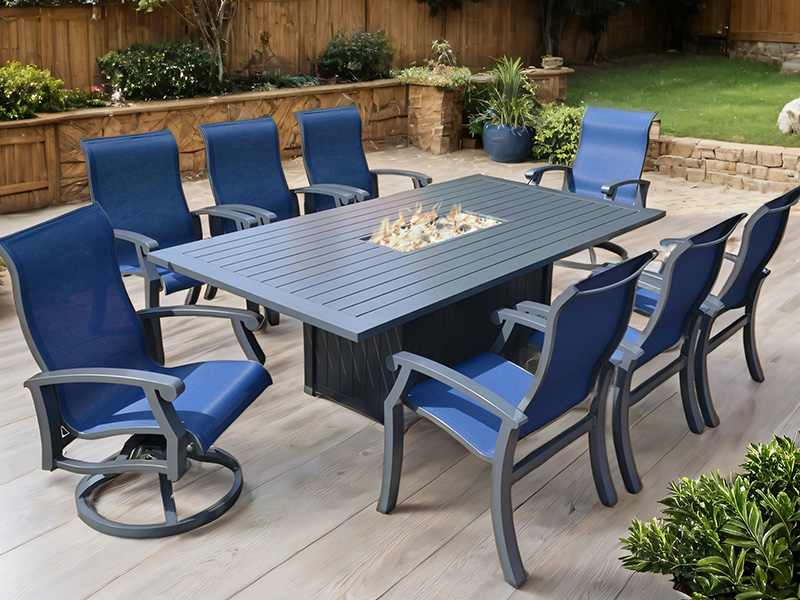
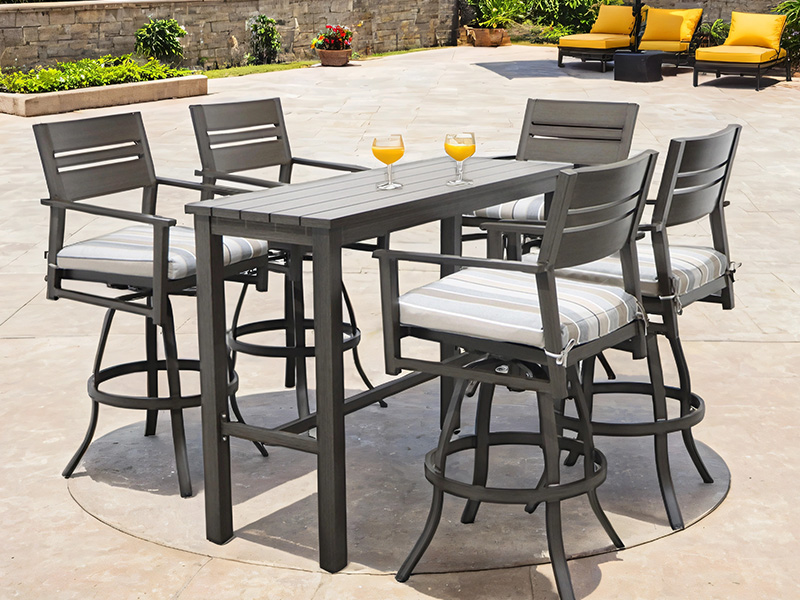
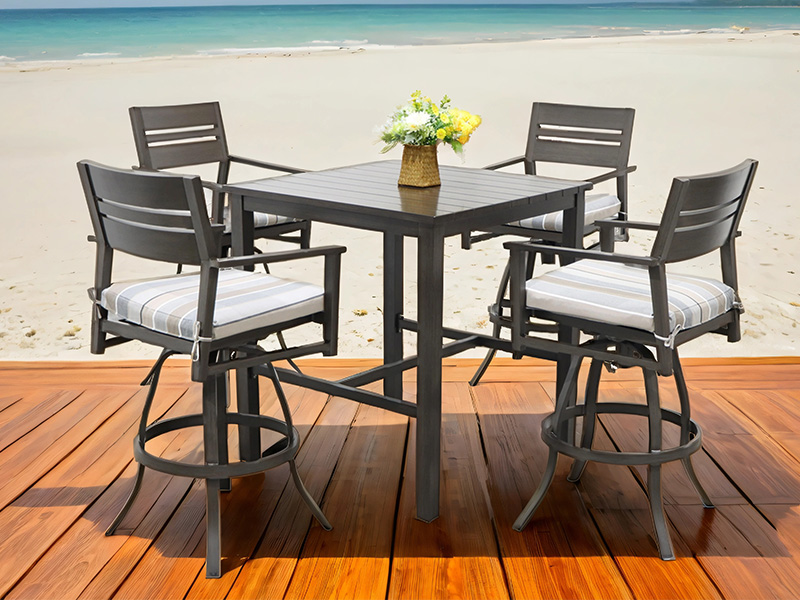
When it comes to selecting outdoor and commercial seating, the aluminum bench provides the definitive answer for durability, low maintenance, and long-term value. Unlike traditional materials that rot, rust, or splinter, aluminum naturally resists corrosion and requires virtually zero upkeep. For any environment exposed to the elements, an aluminum bench is the most practical and long-lasting investment available. This material offers an exceptional strength-to-weight ratio, making it easy to maneuver during installation while remaining robust enough to withstand heavy daily use in high-traffic areas.
The core advantage lies in the metal's inherent chemical properties. When exposed to oxygen, aluminum instantly forms a microscopic, invisible oxide layer on its surface. This layer acts as a permanent shield against further oxidation and degradation. Consequently, facilities managers, urban planners, and homeowners can rely on this seating solution to maintain its structural integrity and aesthetic appeal for decades, drastically reducing replacement cycles and long-term expenditure.
The primary metric for evaluating outdoor furniture is its ability to endure extreme weather fluctuations. Aluminum benches excel in this category, particularly in coastal regions where saltwater spray rapidly accelerates the decay of standard steel and iron. The material is impervious to rain, snow, and intense ultraviolet radiation. Because it does not absorb moisture, it will never warp, crack, or swell like wood.
To further enhance its resilience, modern aluminum seating undergoes a rigorous powder-coating process. Unlike traditional liquid paint, powder coating involves applying dry, thermoplastic particles electrostatically and then curing them under heat. This causes the particles to fuse into a uniform, resilient skin. A high-quality powder coat can extend the visual lifespan of a bench by over 20 years, preventing fading, chipping, and scratching. This treatment also allows the metal to be finished in a vast array of textures and colors, from textured black to metallic bronze, blending seamlessly into any architectural environment.
Maintenance is a significant hidden cost associated with outdoor furniture. Wooden benches demand annual sanding, staining, and sealing to prevent rot. Steel benches require regular inspections for rust spots, followed by wire brushing and repainting. Aluminum, however, eliminates this laborious cycle entirely. The material does not require sealing, staining, or painting.
By removing the need for specialized maintenance equipment and chemical treatments, organizations can allocate their facility management budgets elsewhere. Over ten years, the total cost of ownership for an aluminum bench is significantly lower than that of wood or steel alternatives. This low-maintenance characteristic makes it especially valuable for remote locations or large public parks where regular upkeep is logistically challenging and expensive.
A common misconception regarding metal seating is that it is inherently uncomfortable or unpleasantly cold. Modern manufacturing techniques have effectively resolved this issue. Aluminum is highly malleable during the production process, allowing engineers to design benches with contoured seats, curved backrests, and ergonomic lumbar support that mimic the comfort of indoor furniture.
Aluminum dissipates heat quickly. While it may feel cool to the touch in winter, it does not absorb and retain solar radiation in the same way steel does, meaning it remains relatively cool even under direct summer sunlight. Furthermore, many modern designs utilize a hybrid approach, incorporating aluminum frames with wooden or recycled plastic slats for the seating surface. This combines the structural superiority of metal with the tactile warmth of wood. A standard commercial-grade aluminum bench can comfortably support weight capacities exceeding 800 pounds, accommodating multiple users safely.
To fully understand the value proposition of an aluminum bench, it is essential to compare it directly against the most common alternative materials. The following table outlines the practical differences across several key performance indicators.
| Material | Rust / Rot Resistance | Maintenance Level | Expected Lifespan |
|---|---|---|---|
| Aluminum | Excellent | Very Low | 20+ Years |
| Steel | Poor (Requires Coating) | High | 10-15 Years |
| Wood (Hardwood) | Moderate (Prone to Rot) | High | 10-20 Years |
| Recycled Plastic | Excellent | Low | 15+ Years |
The versatility of aluminum benches allows them to be seamlessly integrated into a wide variety of environments. In commercial settings, their durability is unmatched. They are heavily utilized in municipal parks, school campuses, transit stations, and hospital courtyards. In these high-traffic zones, the furniture must withstand constant use, occasional vandalism, and exposure to spilled food or beverages. The non-porous surface of powder-coated aluminum ensures that graffiti and stains can be removed effortlessly with standard solvents.
In residential applications, homeowners increasingly turn to aluminum for patios, garden paths, and poolside seating. The material's resistance to chlorinated water makes it an ideal choice for swimming pool environments where traditional metals would rapidly corrode. Because aluminum is approximately one-third the weight of steel, it is highly portable, allowing homeowners to easily rearrange their outdoor living spaces as needed. Despite its light weight, the structural engineering of the bench—often featuring thick cast legs or reinforced extruded frames—ensures it remains stable and secure during high winds.
Proper installation is critical to maximizing the lifespan and safety of any public seating. Aluminum benches are typically offered with three primary mounting configurations, each suited to specific environmental needs and security requirements.
This is the most common installation method for existing concrete or paved surfaces. The bench legs are equipped with mounting plates that feature pre-drilled holes. Installers use heavy-duty masonry anchors or concrete screws to secure the bench firmly to the ground. This method provides excellent stability while allowing for relatively straightforward relocation if the landscape design changes in the future.
For maximum security and theft deterrence, in-ground mounting is the preferred choice. The bench legs extend into extended posts that are buried deep into the earth and set in concrete footings. This permanent installation method is highly recommended for unsupervised public areas, as it prevents the furniture from being moved, stolen, or used as a projectile. It also provides superior resistance against heavy impacts.
Some models are designed to be completely free-standing. To ensure stability without permanent anchoring, manufacturers often incorporate integrated ballasts or recommend adding heavy gravel or sand into the hollow leg cavities. This option is ideal for rooftop gardens, seasonal patio spaces, or indoor commercial environments like shopping malls where permanent floor penetrations are not permitted.
In an era where environmental responsibility is paramount, the sustainability of materials used in urban infrastructure is heavily scrutinized. Aluminum is one of the most environmentally friendly metals available for manufacturing. It is 100% recyclable, meaning it can be melted down and reformed indefinitely without losing any of its inherent physical properties or structural strength.
The recycling process for aluminum requires only a fraction of the energy needed to extract and refine raw bauxite ore. Producing recycled aluminum consumes approximately 5% of the energy required for primary production, resulting in a massive reduction in greenhouse gas emissions. By choosing an aluminum bench, urban developers and consumers are supporting a circular economy. At the end of its exceptionally long functional life, the bench can be completely recycled, diverting waste from landfills and reducing the demand for virgin mining operations.
Selecting the right outdoor seating requires balancing initial cost against long-term performance. While the upfront investment for a high-quality aluminum bench may be comparable to or slightly higher than premium hardwood, the total cost of ownership tells a different story. The elimination of maintenance labor, chemical treatments, and frequent replacements provides a superior return on investment over the lifespan of the product.
By offering unmatched weather resistance, ergonomic comfort, and environmentally sustainable characteristics, the aluminum bench stands as the premier choice for anyone looking to install reliable, long-term seating. Whether anchoring a busy urban transit hub or providing a quiet resting place in a private garden, it delivers consistent performance and aesthetic stability year after year.
Sep 25, 2025-BY ADMIN

Sep 25, 2025-BY ADMIN
Sep 25, 2025-BY ADMIN
Sep 25, 2025-BY ADMIN




 English
  Français
  Español
  Deutsch
  عربى
عربى