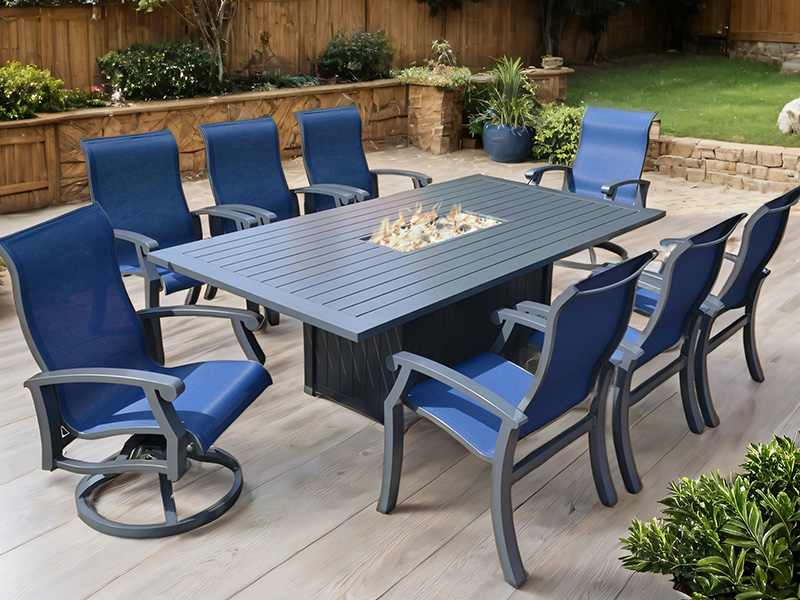
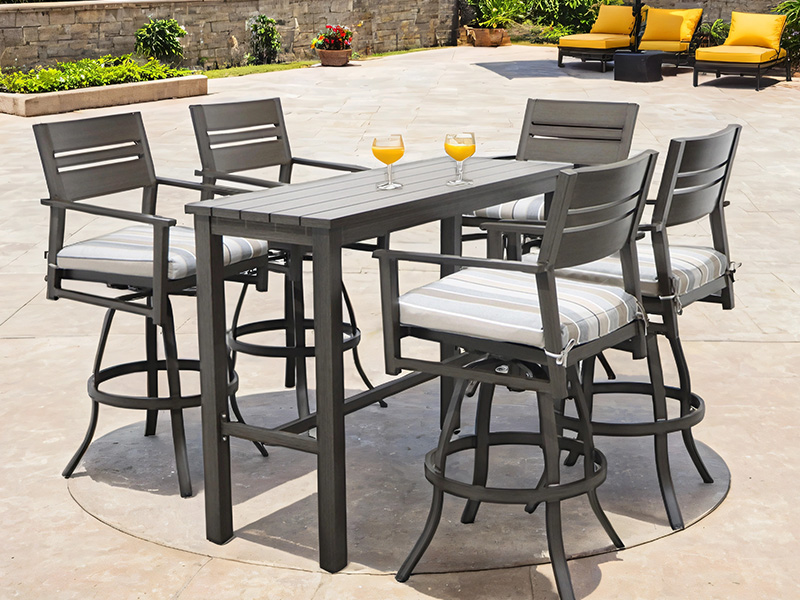
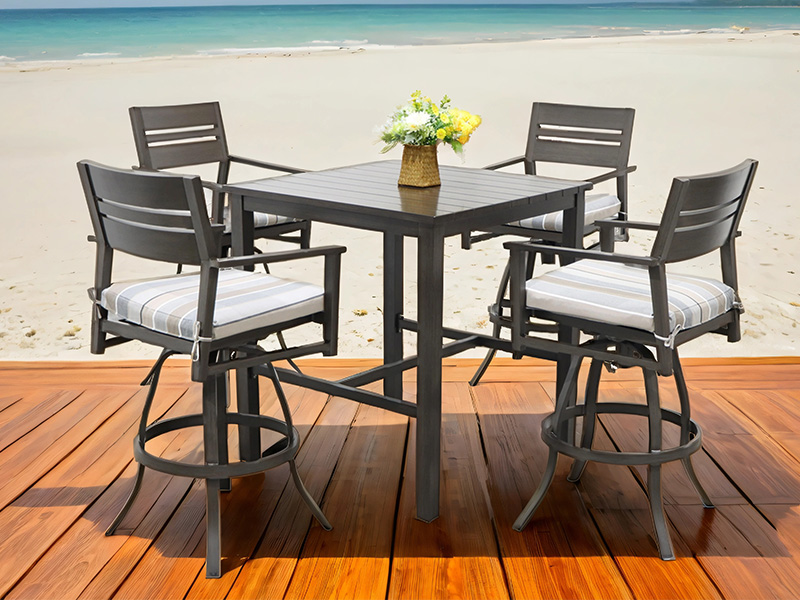
Walk through any patio furniture showroom, and you'll find products labeled as aluminum or steel placed side by side, at similar price points, with similar designs. The sales descriptions for both materials tend to use the same words: durable, weather-resistant, and long-lasting. But aluminum and steel are physically quite different metals that behave differently outdoors, and those differences have real consequences for how long your furniture looks good, how much maintenance it requires, and how practical it is to move and rearrange. Choosing between them based on looks alone is the most common way outdoor furniture buyers end up disappointed.
The single most important difference between aluminum and steel in outdoor furniture is how they respond to moisture. Steel is an iron alloy, and iron oxidizes readily in the presence of water and oxygen — the chemical process that produces rust. When rust forms on a steel surface, it doesn't stop at the surface: the rusted area absorbs additional moisture more readily than bare steel, the rust layer flakes off to expose fresh metal, and the corrosion progresses inward over time. Steel patio furniture in a humid coastal environment can develop visible rust within a single season if the protective finish is compromised.
Aluminum doesn't rust. When aluminum's surface is exposed to oxygen, it forms a thin layer of aluminum oxide that is tightly bonded to the metal surface and does not flake off or progress. This oxide layer actually provides the underlying metal with protection — the surface appearance may dull over time (aluminum can develop a chalky gray appearance called oxidation), but the metal itself does not weaken or corrode in the way iron-based steel does. In marine and coastal environments where salt air is a constant factor, this difference is the deciding one: steel requires vigilant maintenance to remain serviceable, while aluminum can be left outdoors year-round with minimal care.
Aluminum has a density of approximately 2.7 g/cm³ versus steel's 7.8 g/cm³ — nearly three times lighter. In finished furniture, this translates to outdoor chairs and tables that are approximately one-third the weight of equivalent steel pieces. The practical implications go beyond simply "easier to move."
Lightweight aluminum furniture is repositioned easily by one person — ideal for patios and outdoor spaces where furniture arrangement changes frequently, for rooftop terraces where structural load limits matter, and for rental and hospitality operations where furniture is moved between configurations daily. The lighter weight also means that sets with many chairs can be moved and stored by a single person without equipment.
Heavy steel furniture, by contrast, offers stability in wind that very light aluminum furniture can lack. A solid steel dining chair in an exposed garden area is unlikely to blow over in a moderate gust; an exceptionally lightweight aluminum chair on the same patio may need weighing down or securing. For permanently positioned furniture in sheltered spaces — a covered pergola, a walled courtyard — the weight difference matters less. For exposed rooftop or open garden installations, the comparison between stability and portability is a genuine design consideration.
Steel is inherently stronger than aluminum at equivalent cross-sections — its tensile strength and yield strength significantly exceed those of aluminum alloys at the same section dimensions. For furniture frames, this means steel can be made with thinner-wall tube sections and still provide adequate structural rigidity, while aluminum frames typically require somewhat thicker walls or larger tube diameters to achieve equivalent frame stiffness.
In quality outdoor furniture manufacturing, both materials are used in forms that provide adequate structural performance for the application — the structural difference between materials is accounted for in the design and specification of the frame dimensions. The practical distinction for buyers is that the perceived stiffness of a frame (how much flex or movement is felt when sitting in the piece) depends not just on material but on frame design, joint quality, and construction method. A well-designed cast aluminum frame can feel more rigid than a poorly designed thin-wall steel tube frame of equivalent price, and vice versa.
Cast aluminum — the process of pouring molten aluminum into molds to produce complex shapes like decorative furniture legs, arms, and ornamental elements — is a manufacturing method unique to aluminum in the outdoor furniture context. Cast aluminum produces intricate, one-piece components without seams or welded joints, which both improves structural integrity and allows more complex visual design than welded tube steel frames. Many of the most detailed and visually sophisticated patio furniture designs use cast aluminum precisely because the casting process can achieve ornamental forms that are difficult or impossible to reproduce in steel tube construction.
Aluminum outdoor furniture requires minimal maintenance. It does not need annual repainting or rust treatment. Cleaning with soap and water is typically sufficient to remove surface dirt, bird droppings, and seasonal grime. Powder-coated aluminum — the standard finish for quality outdoor aluminum furniture — provides a UV-resistant, chip-resistant surface that retains its appearance for many years without refinishing. If the powder coat is scratched or chipped (which can happen with significant impact), the exposed aluminum itself will not rust, though the chip should eventually be touched up to prevent the chalky oxidation appearance that bare aluminum develops over time.
Steel outdoor furniture requires more attention. Powder-coated or galvanized steel is protected by its finish, but that finish is the critical factor — if it is chipped, scratched, or worn away (particularly at cut edges, weld points, or hardware holes), the exposed steel will begin rusting. Annual inspection of all paint and coating surfaces, immediate touch-up of any damage, and particular attention to areas where hardware contacts the frame (where moisture can wick under a bolt head and initiate rust from the inside) are the maintenance requirements for steel patio furniture. In coastal or high-humidity environments, even well-maintained steel furniture may develop surface rust that requires periodic sanding and repainting to manage.
At equivalent quality levels, aluminum patio furniture typically costs more than steel patio furniture. The aluminum material itself costs more than steel per kilogram, and the casting and forming processes for complex aluminum components are more expensive than equivalent steel tube fabrication. This cost difference is most pronounced in ornamental cast aluminum furniture, which uses significant material in decorative elements and requires expensive casting tooling.
However, the total cost of ownership over the furniture's service life often favors aluminum. Steel furniture that is not maintained consistently in harsh outdoor environments will require repainting, rust treatment, or eventually replacement within 5–10 years in coastal or humid conditions. Aluminum furniture in the same environment, maintained only with periodic cleaning, can realistically last 15–20 years or more while retaining an acceptable appearance. The higher initial cost of aluminum, amortized over its longer effective service life in demanding environments, often produces a lower annual ownership cost than the cheaper steel alternative that requires active maintenance or earlier replacement.
| Factor | Aluminum Patio Furniture | Steel Patio Furniture |
|---|---|---|
| Rust/corrosion resistance | Excellent — does not rust; surface oxidation only | Vulnerable if the coating is damaged; rust progresses through the material |
| Weight | Light — approximately 1/3 the weight of steel at the same dimensions | Heavy — substantially heavier than aluminum |
| Portability | High — easy to move and rearrange | Low — difficult to move without assistance |
| Stability in wind | May need securing in exposed locations if very lightweight | High stability due to weight |
| Design possibilities | Excellent — cast aluminum enables complex ornamental forms | Good — tube steel allows strong structural forms; less ornamental |
| Maintenance requirement | Low — periodic cleaning; no annual repainting | Moderate to high — regular inspection and touch-up of coating |
| Coastal/marine suitability | Excellent — the preferred choice for salt-air environments | Poor without frequent maintenance; salt accelerates rust progression |
| Initial cost | Higher — aluminum material and casting are more expensive | Lower — steel tube fabrication less costly |
| Long-term value | Better — longer service life with less maintenance cost | Lower if maintenance is neglected; higher if consistently maintained |
| Powder coat compatibility | Excellent — powder coat adheres well; UV and chip resistant | Good — powder coat provides protection; must be intact to prevent rust |
For coastal, lakefront, poolside, and any other consistently humid or salt-exposed outdoor location, aluminum is the clear material choice. Its intrinsic corrosion resistance in these environments is not a feature that maintenance can replicate in steel — the materials simply respond differently to salt and moisture at the chemistry level, and no amount of repainting will give steel the oxidation resistance that aluminum provides without any maintenance at all.
For protected inland locations — covered patios, pergolas, walled courtyards — where direct rain exposure is limited, and humidity is moderate, steel furniture maintained with the care its finish requires can be a practical and cost-effective choice. Heavy steel furniture in these contexts also provides the substantial feel and wind stability that some buyers prefer, and the lower initial cost may be the deciding factor when furnishing a large outdoor space with many pieces.
For commercial applications — hotels, restaurants, event venues, rental operations — aluminum is the pragmatic commercial choice in almost all situations. The combination of durability without maintenance, lighter weight for daily repositioning, and long service life before replacement consistently favors aluminum in commercial outdoor environments, where the labor cost of ongoing maintenance and the disruption of frequent replacement are real operating costs that justify the higher initial material investment.
Aluminum is softer than steel and can dent if struck by a significant impact — dropping a chair onto a hard surface, for example, may produce dents that a steel chair would not show. Cast aluminum components (legs, arms, ornamental elements formed by casting) are thicker and more resistant to denting than thin-wall tube aluminum. For environments where furniture is handled roughly or is at risk of frequent impacts, thicker cast aluminum construction provides better resistance than lightweight tube aluminum, and steel has an advantage in dent resistance at the same section thickness. For normal outdoor residential use, denting is rarely a practical concern for quality aluminum furniture.
Yes — aluminum can be powder-coated or wet-painted in any color, and a damaged powder coat finish can be recoated in a professional powder coating shop. Field painting with spray paint is possible, but typically produces a less durable finish than factory powder coating. The aluminum surface must be properly prepared before painting (cleaned, lightly abraded, and ideally primed with an aluminum-specific primer) for the new coating to adhere properly. Attempting to paint over rust-free bare aluminum without surface preparation typically results in peeling within a season. If you want to change the color of existing powder-coated aluminum furniture, professional powder coating is the recommended approach — it strips the old coating, prepares the surface, and applies a fresh, durable powder coat in the new color.
Wrought iron and steel are both iron-based metals, but they are different materials. Wrought iron has a much lower carbon content than modern steel and was produced historically by a labor-intensive hand-forging process. Almost all furniture marketed today as "wrought iron" is actually mild steel fabricated to look similar to traditional wrought iron — the true wrought iron manufacturing process is no longer commercially practiced at scale. Both are subject to rust when their protective finish is damaged. Traditional wrought iron had slightly better corrosion resistance than mild steel due to its lower carbon content and the slag inclusions from the manufacturing process, but modern "wrought iron" furniture should be treated and maintained the same as any other outdoor steel furniture in terms of rust prevention.
Sep 25, 2025-BY ADMIN

Sep 25, 2025-BY ADMIN
Sep 25, 2025-BY ADMIN
Sep 25, 2025-BY ADMIN




 English
  Français
  Español
  Deutsch
  عربى
عربى