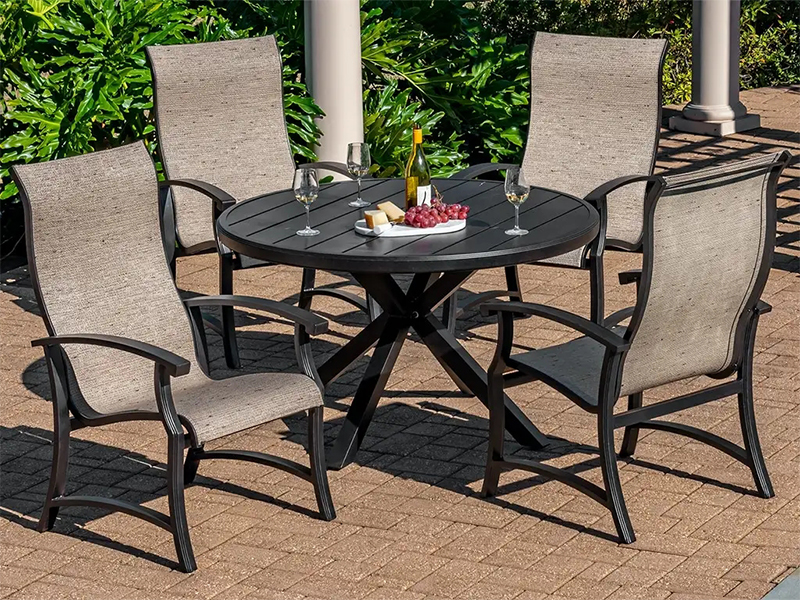
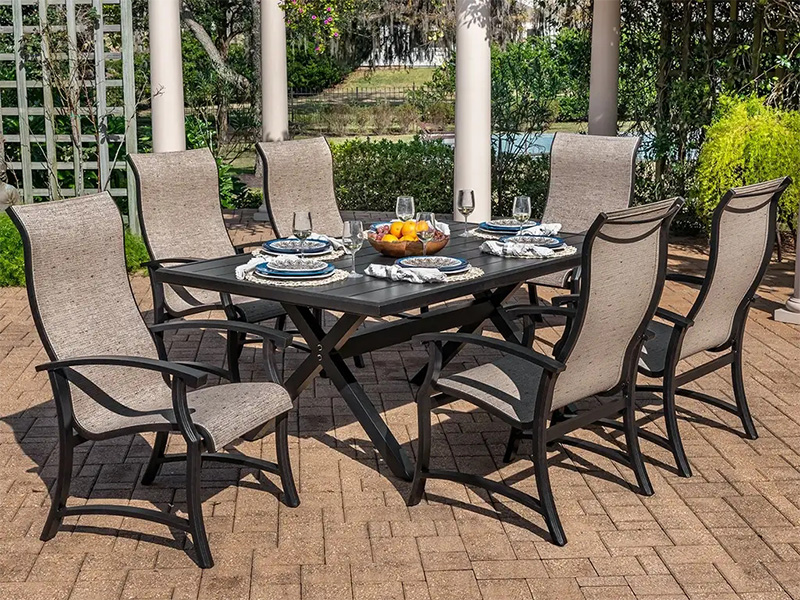
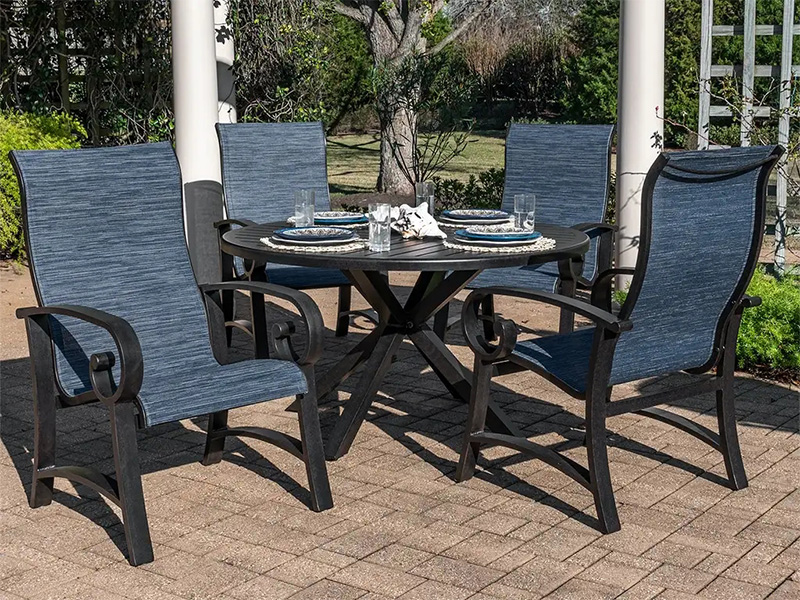
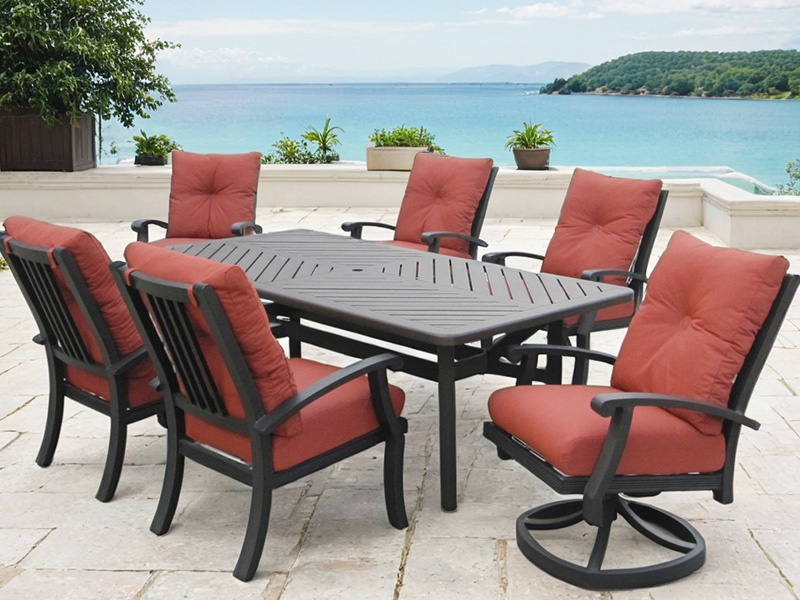
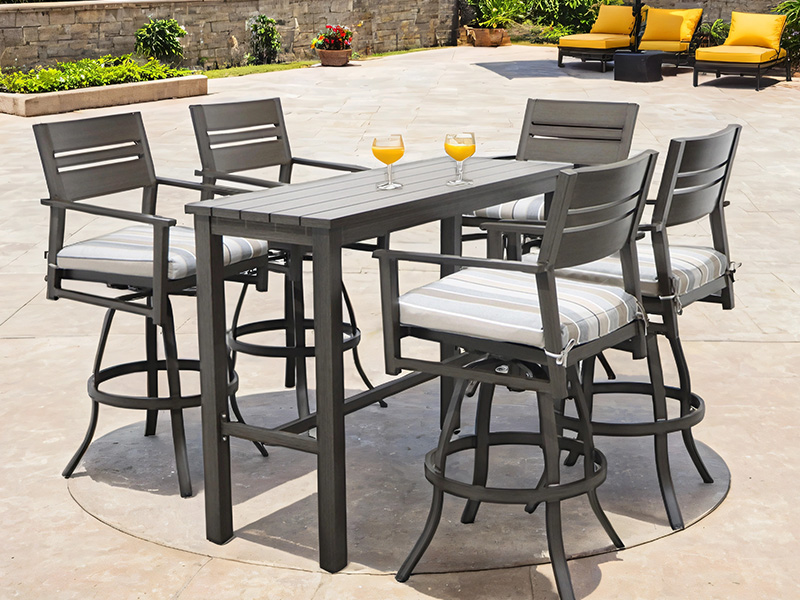
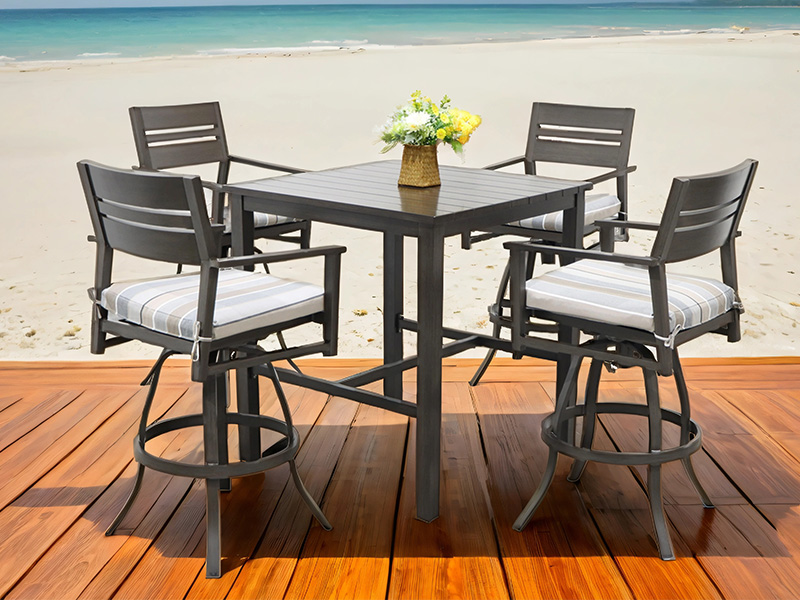
An aluminum patio swivel barstool set is the absolute best investment you can make for your outdoor entertaining area, offering an unbeatable combination of weather resistance, low maintenance, and ergonomic comfort. When evaluating materials for outdoor furniture, aluminum consistently outperforms wood, wrought iron, and basic plastics because it simply does not rust, warp, or require seasonal resealing. The addition of a swivel mechanism elevates the seating experience from static and rigid to dynamic and social, allowing guests to easily rotate and engage in conversations across different zones of a patio without physically moving heavy furniture. Choosing this specific type of furniture fundamentally transforms a basic backyard into a highly functional, hospitality-grade lounge space.
Understanding the structural and chemical properties of aluminum reveals exactly why it is the premier material for outdoor settings. Unlike iron or steel, which rely on coatings to prevent oxidation, aluminum naturally forms a protective oxide layer when exposed to air. This means that even if the surface is scratched, the metal underneath will not succumb to rust. This inherent corrosion resistance makes it particularly suited for environments exposed to rain, humidity, and pool chemicals.
One of the most practical benefits of aluminum is its remarkable weight-to-strength ratio. A standard barstool frame can easily support significant weight while remaining light enough to be repositioned by a single person. This mobility is crucial for residential patios where layouts frequently change based on the occasion, whether you are hosting a large gathering or creating an intimate space for two. Despite being lightweight, high-quality cast or extruded aluminum frames are incredibly robust and will not bend or buckle under normal use.
A common complaint about metal outdoor furniture is that it becomes uncomfortably hot in direct sunlight. Aluminum, however, has a lower thermal mass compared to iron or steel. It heats up and cools down much faster, meaning it will not store blistering heat throughout a summer afternoon. When combined with breathable, weather-resistant sling fabrics or ventilated seat cushions, the seating remains comfortable even during peak temperatures.
The swivel feature is not merely a decorative luxury; it is a fundamental ergonomic upgrade that changes how people interact in a bar-height setting. In a standard static barstool, turning to speak to someone behind you or reaching for a drink on a side table requires twisting the spine or sliding the entire chair across the ground. This can be awkward, disruptive, and potentially damaging to patio flooring.
A swivel mechanism eliminates these issues by allowing a 360-degree range of motion while the base remains firmly planted. This is particularly beneficial at outdoor bars or kitchen counters where the environment is inherently social. Guests can face the cook, turn to watch children in the pool, or face outward to enjoy the view, all without leaving their seats. High-quality swivel hardware is typically sealed to prevent dirt and moisture from infiltrating the bearings, ensuring smooth, squeak-free rotation for years.
Bar-height seating requires climbing onto a footrest and elevating the body significantly higher than a standard chair. A swivel barstool allows users to simply sit down facing forward, and then effortlessly spin into the correct position at the counter. When it is time to leave, the user can swing their legs out without the backrest of the stool blocking their path. This seemingly small mechanical advantage makes a massive difference in accessibility and overall user comfort, especially for older adults or individuals with limited mobility.
Not all aluminum patio swivel barstool sets are created equal. The manufacturing process used to form the metal dictates both the aesthetic appeal and the structural integrity of the furniture. Understanding the difference between cast and extruded aluminum is essential for making an informed purchase.
| Feature | Cast Aluminum | Extruded Aluminum |
| Manufacturing Process | Molten aluminum poured into molds | Forced through dies to create shapes |
| Aesthetic Style | Ornate, traditional, highly detailed | Sleek, modern, minimalist lines |
| Weight | Heavier and more substantial | Lighter and easier to move |
| Joint Strength | Seamless, fewer structural weak points | Requires welded or bolted joints |
Cast aluminum is often preferred for classic, decorative styles because the molding process allows for intricate floral or geometric patterns that cannot be achieved with extrusion. Because the pieces are cast as whole components, there are fewer joints where water can intrude or welds that can fail over time. Extruded aluminum, on the other hand, excels in contemporary designs. It offers exceptionally clean lines and is perfectly suited for minimalist, industrial, or coastal aesthetics. Both methods result in highly durable furniture, so the choice largely depends on the architectural style of your home and patio.
When evaluating an aluminum patio swivel barstool set, looking beyond the surface finish is crucial to ensuring long-term satisfaction. Several mechanical and design features separate a premium set from a mediocre one.
While aluminum does not rust, it can oxidize or suffer from UV degradation over time, leading to a dull or chalky appearance. A high-quality, baked-on powder coating is non-negotiable. This process involves applying dry pigment electrostatically and then curing it under high heat, creating a finish that is significantly harder and thicker than standard liquid paint. It resists chipping, fading, and scratching. Look for UV-resistant formulations, particularly if your patio receives intense, direct sunlight for most of the day.
The footrest is arguably the most critical ergonomic element of a barstool. If the footrest is positioned too high, it forces the knees upward, causing uncomfortable pressure on the thighs. If it is too low, the legs dangle, creating strain on the lower back. A well-designed aluminum barstool will feature a tubular or slatted footrest that is proportionally integrated into the frame. Additionally, ensure the footrest does not interfere with the swivel mechanism.
The aluminum frame serves as the skeleton, but the seat material dictates the tactile comfort. There are generally two highly effective routes for outdoor seating:
Introducing a barstool set into an outdoor space requires careful spatial planning to ensure the area feels open rather than cluttered. Because swivel barstools require a rotational radius, they demand more physical space than static chairs. A common mistake is placing a bar counter too close to a wall or railing, which restricts the swivel function and defeats the purpose of the design.
Barstools are not one-size-fits-all. Purchasing a set without measuring your counter or bar top will result in either cramped legs or an awkwardly low seating position where eating or drinking is difficult. Before selecting a set, accurately measure the distance from the floor to the underside of your counter.
To allow for comfortable swiveling and easy entry, you should allow a minimum of 24 to 30 inches of linear space per stool along the counter. Furthermore, there should be at least 18 to 24 inches of clearance behind the stool to allow for foot traffic and the sweeping motion of the chair as it rotates. If your patio is narrow, consider backless designs or stools with low-profile backs to maximize the visual and physical space.
The primary appeal of an aluminum patio swivel barstool set is its low maintenance profile, but low maintenance does not mean zero maintenance. Implementing a few simple care habits will dramatically extend the lifespan and appearance of your set.
The biggest threat to outdoor furniture is not the rain, but the accumulation of dirt, pollen, and bird droppings. When these substances sit on a powder-coated surface, they can slowly etch into the finish over time. A routine cleaning every few weeks using a mixture of mild dish soap and warm water is entirely sufficient. Use a soft-bristle brush or cloth to gently scrub the frames and seat materials, then rinse thoroughly with a garden hose. Avoid using abrasive sponges, bleach, or harsh chemical solvents, as these will degrade the powder coating and compromise the UV protection.
The swivel bearing is the only moving part on the stool, making it the most vulnerable to environmental wear. Dirt and grit can work their way into the bearing housing, causing a grinding sensation or squeaking. During your seasonal deep cleaning, use a hose with a nozzle attachment to flush out the area where the seat meets the central post. If the swivel begins to feel stiff, a brief application of a silicone-based lubricant will restore smooth movement. Strictly avoid using oil-based lubricants like WD-40, as these attract dust and dirt, ultimately accelerating wear and creating a messy residue on your patio surface.
While aluminum frames can withstand winter weather indefinitely, the same cannot always be said for the seat materials or the swivel hardware. If you live in an area with harsh winters characterized by freezing temperatures, heavy snow, and ice, it is highly recommended to store the barstools in a garage, shed, or under a heavy-duty, breathable furniture cover. Leaving them exposed to freeze-thaw cycles can cause any trapped moisture inside the swivel bearings to expand and contract, potentially warping the metal components over time.
The functional benefits of an aluminum swivel barstool set extend far beyond simple seating; they actively facilitate better social dynamics. In an outdoor setting, entertainment is rarely linear. A host might be tending to a grill, a guest might be mixing drinks at the bar, and others might be relaxing in a seated area. Static furniture creates physical and psychological barriers between these zones. Swivel seating bridges these gaps. It creates a fluid environment where people feel connected to the entire space rather than isolated in their specific chair.
Furthermore, the visual aesthetic of a well-chosen aluminum set elevates the perceived value of your outdoor space. The clean lines and substantial feel of metal furniture convey permanence and quality, contrasting sharply with cheap, flimsy plastic chairs that can make a beautiful patio look like an afterthought. By carefully selecting the finish—such as a matte black for a modern look, a bronze tone for a rustic feel, or a pristine white for a coastal vibe—you can seamlessly tie together the architectural elements of your home with your landscaping.
Ultimately, investing in an aluminum patio swivel barstool set is a decision that pays continuous dividends in usability, comfort, and aesthetic appeal. It represents a shift from merely placing furniture outside to deliberately designing an outdoor living room that functions with the same efficiency and comfort as your indoor spaces, while standing up flawlessly to the demands of the natural environment.
Sep 25, 2025-BY ADMIN

Sep 25, 2025-BY ADMIN
Sep 25, 2025-BY ADMIN
Sep 25, 2025-BY ADMIN




 English
  Français
  Español
  Deutsch
  عربى
عربى